JavaScript is disabled. For a better experience, please enable JavaScript in your browser before proceeding.
You are using an out of date browser. It may not display this or other websites correctly.
You should upgrade or use an
alternative browser .
Tại sao trào ngược dạ dày tăng mạnh sau kỳ nghỉ Tết?
Sau Tết, nhiều người xuất hiện ợ nóng, ợ chua, đau thượng vị – dấu hiệu trào ngược dạ dày. Chuyên gia cho rằng nguyên nhân chủ yếu đến từ ăn uống, rượu bia và sinh hoạt đảo lộn. Sau kỳ nghỉ Tết Nguyên đán, không ít người bắt đầu cảm thấy nóng rát sau xương ức, ợ chua liên tục, đầy bụng hoặc đau âm ỉ vùng thượng vị. Đây là những biểu hiện điển hình của trào ngược dạ dày thực quản – căn bệnh tiêu hóa phổ biến nhưng thường bị xem nhẹ. Theo các bác sĩ chuyên khoa...
Đọc bài gốc tại
đây
Đăng nhập một lần thảo luận tẹt ga
window.googletag = window.googletag || {cmd: []};
googletag.cmd.push(function() {
window.uk_delivery_1753154734465 = googletag.defineSlot('/57976558/Ureka_Supply_home.vn_Outstream_1x1_270225', [1,1], 'div-gpt-ad-1753154734465-0').addService(googletag.pubads());
googletag.pubads().enableSingleRequest();
googletag.enableServices();
googletag.display('div-gpt-ad-1753154734465-0');
});
googletag.cmd.push(function() {
if(googletag.pubads().isInitialLoadDisabled() && !window.uk_delivery_1753154734465.getResponseInformation()){
googletag.pubads().refresh([window.uk_delivery_1753154734465])
}
});
window.googletag = window.googletag || {cmd: []};
googletag.cmd.push(function() {
window.uk_delivery_1753685560510 = googletag.defineSlot('/57976558/Ureka_Supply_home.vn_InpageMB_1x1_110325', [1,1], 'div-gpt-ad-1753685560510-0').addService(googletag.pubads());
googletag.pubads().enableSingleRequest();
googletag.enableServices();
googletag.display('div-gpt-ad-1753685560510-0');
});
googletag.cmd.push(function() {
if(googletag.pubads().isInitialLoadDisabled() && !window.uk_delivery_1753685560510.getResponseInformation()){
googletag.pubads().refresh([window.uk_delivery_1753685560510])
}
});

 Đoạn Video
 Ảnh
Ảnh






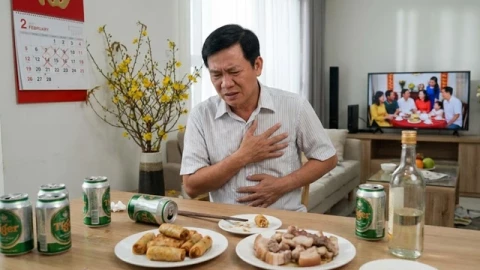 Sau Tết, nhiều người xuất hiện ợ nóng, ợ chua, đau thượng vị – dấu hiệu trào ngược dạ dày. Chuyên gia cho rằng nguyên nhân chủ yếu đến từ ăn uống, rượu bia và sinh hoạt đảo lộn. Sau kỳ nghỉ Tết Nguyên đán, không ít người bắt đầu cảm thấy nóng rát sau xương ức, ợ chua liên tục, đầy bụng hoặc đau âm ỉ vùng thượng vị. Đây là những biểu hiện điển hình của trào ngược dạ dày thực quản – căn bệnh tiêu hóa phổ biến nhưng thường bị xem nhẹ. Theo các bác sĩ chuyên khoa...
























![[NU OU NUE] TUYỂN NHÂN VIÊN BÁN HÀNG THỜI TRANG NỮ – QUẬN 1 - 265BIS NGUYỄN TRÃI](https://cdn.vnreview.vn/40289-d2886adfb4d238cbb0cc38cd80e2a62f_hvn_100x70_jpg)